We have an apple orchard. Actually, it has us. Two dozen Braeburn, Gala, Granny Smith, and Mutsu trees that we never have time to take care of properly fend for themselves, and we drop by in September to pick or pick up our share.
With a family and town jobs and a garden and a hundred other acres to look after, we do not have time to do anything in the orchard but mow. We are seriously neglectful: In the summer, the trees’ limbs crack and break from the weight of all the fruit. Two years ago, all the blossoms frosted. Last year, we had fire blight. Every year, the apples themselves are covered with tiny whorls of some black fungus that hasn’t killed them or us yet.
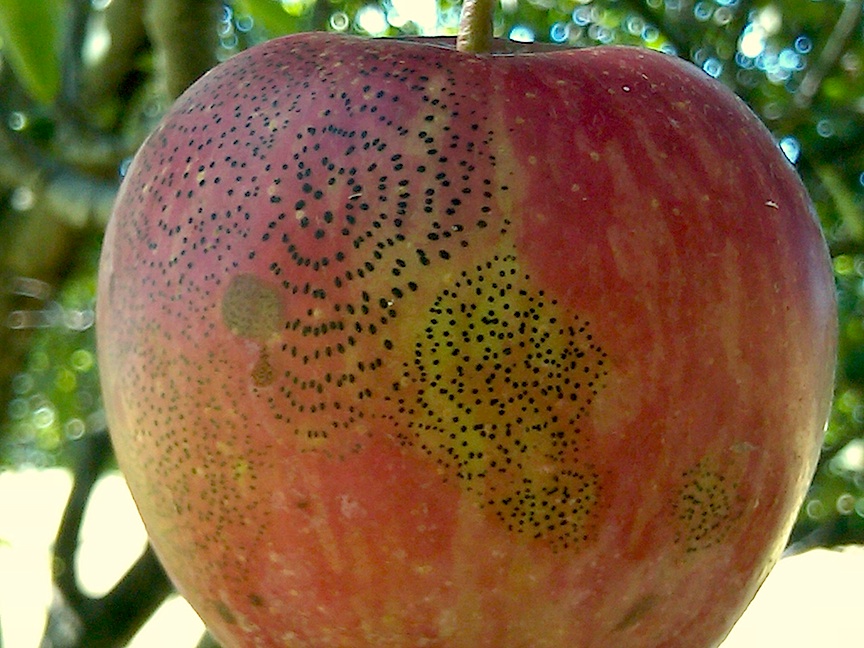
And yet we take away all the fruit we can use, and every bite is bliss.
This Mutsu, for instance, Keith’s father planted in 1967, and in 2011 it yielded exactly one apple. But it is big enough for two people even with its blemishes pared away, and it is so crisp and delicious. . . .

There is no such thing as a perfect apple at the Perry Farm. Because three-quarters of the yield on any tree is inedible, covered with insect stings or fungus or windfall bruises, we have become masters of eating our apples from the inside out, splitting them open with our thumbs and nibbling toward their blemished skin.
We are scavengers in our own orchard.
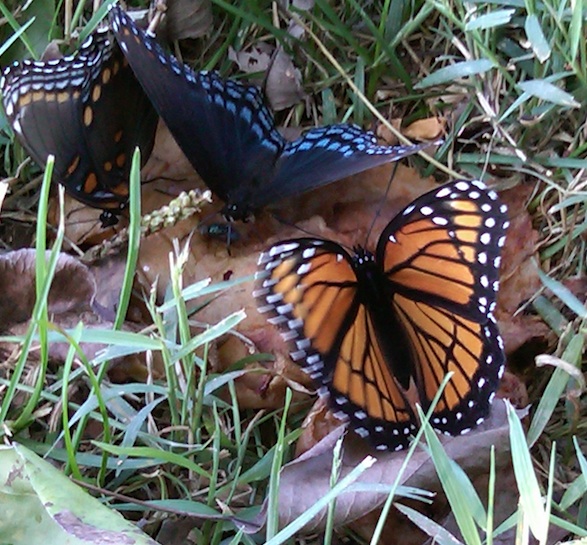
To get to the fruit, we have to pick our way around the swarms of bees and butterflies who get first dibs. Earlier this summer, one of the Braeburns split, and Keith was able to save only half of it. The north limb, already heavy with fruit, lay on the grass until he had time to haul it away. It left behind a bare spot and a couple of bushels of apples: Our apple graveyard. On the carcass of a single apple, we have counted as many as thirteen butterflies—Hackberry Emperors, Viceroys, Commas, Painted Ladies, Blue-Spotted Purples, and Red Admirals.
It could be our imaginations, but ground-feeding butterflies seem friendlier than flower feeders. They are less skittish, more likely to perch on our shoulders to say hello. And before we know it, we’ve lost an hour watching them and our basket is still empty.
Our inability to take care of our orchard properly haunts us. We worry that whatever that black fungus is, it might be spreading with the bees to someone else’s orchard. We are embarrassed about our trees’ overgrown branches and the lichens spreading over their gnarled trunks. Every winter, while we drink hot tea and eat toasted bread with homemade apple butter, we talk about cutting at least some of the trees down.
Instead, every year, we get one more tree pruned. It’s the best we can do… for everyone concerned.
 M. H. Perry
Leave a comment