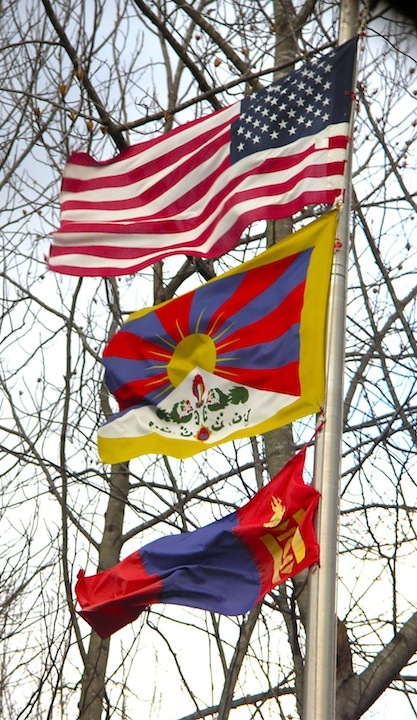
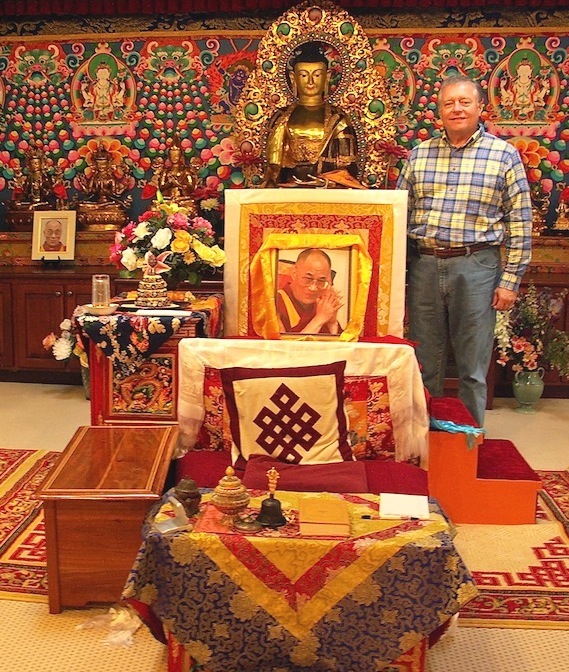
 Particularly at this time of the year, when our part of the world has gone drab, the daylight has been rationed, and the sky looms over our heads like a sopping wet, grey dishcloth, we feel a need to venture out to exotic foreign climes. It is our good fortune that the Tibetan Mongolian Buddhist Cultural Center is only an hour-and-a-half drive from the farm. This celebration of red and gold belongs on a mountaintop in Tibet, kept earthbound by a piercingly blue sky. But here it is, on the southeast corner of Bloomington, Indiana, tucked into a wooded glen that, at least in comparison to the Dalai Lama’s homeland, is flat as a pancake, nary a yak, let alone a snow lion, in sight.
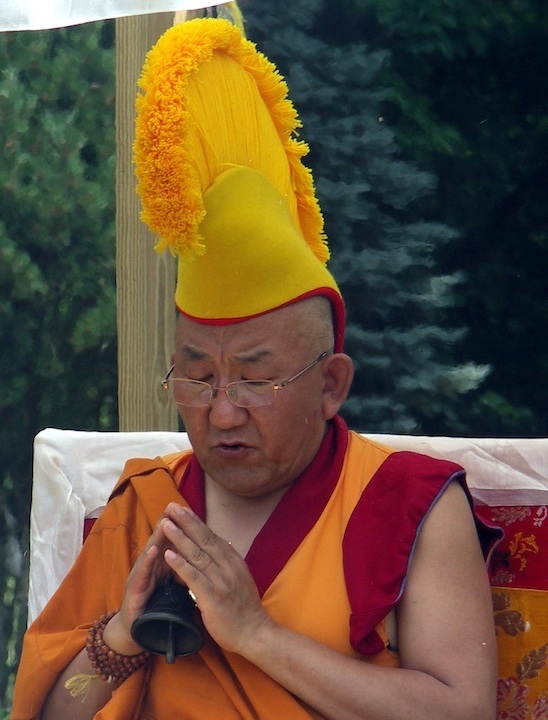
The Dalai Lama’s brother, Thubten Jigme Norbu, founded the Center more than thirty years ago. Its current director, Arjia Rinpoche, formerly Abbot of Kumbum Monastery, escaped from Tibet in 1998 (a story he tells in Surviving the Dragon). Rinpoche, who is kind and approachable, quick to offer a smile and a show of support, continues to carry out the Center’s original mission, which is to share Tibetan and Mongolian culture—i.e., art, literature, language, dress, food, rituals, and spiritual beliefs—with the western world.
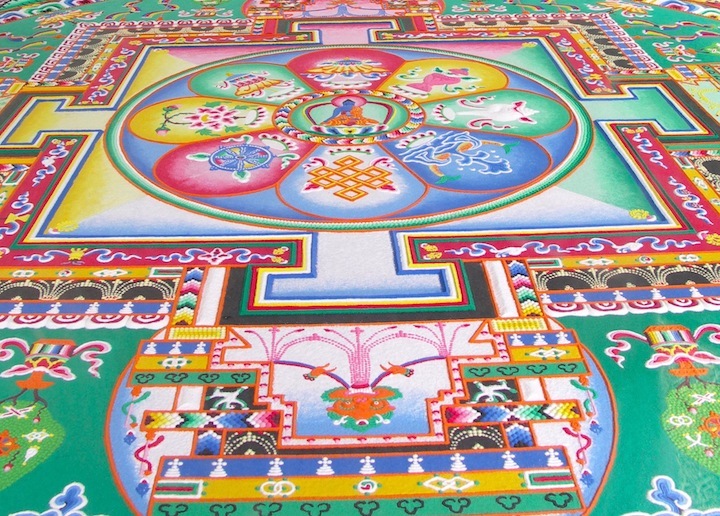
TMBCC offers an astounding display of this culture. To enter the grounds, you must drive through an ornate, brightly painted, Tibetan-style gate. On your left is the entrance to the kora, a meditation trail that encircles the grounds. The first stop on the trail is a pagoda housing a solar-powered “dharma” wheel (essentially an automated prayer machine). Beneath the wheel is a painstakingly intricate sand “mandala” Keith and I watched Tibetan monks create—sand grain by sand grain–prior to the Dalai Lama’s visit last year.
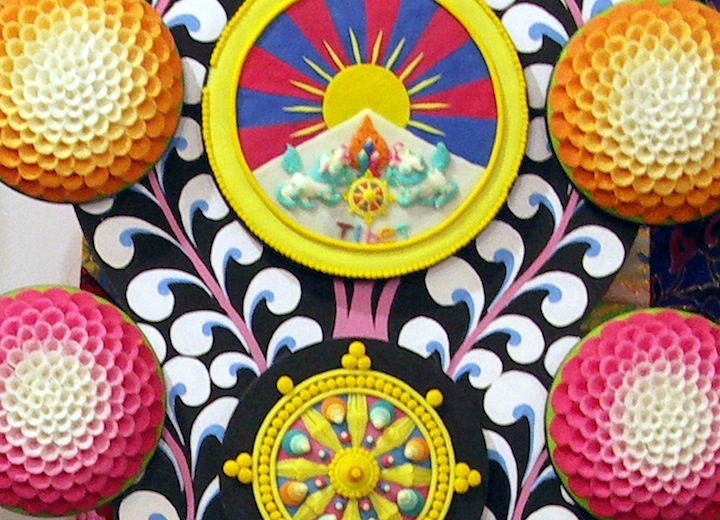

A second chorten faces the Kumbum Chamtse Ling Monastery, where the monks live, conduct rituals and ceremonies, and share the “dharma.” What’s the dharma? Buddhist teachings. Buddhism came to Tibet via India nearly fifteen hundred years ago. Its basic tenets focus on the importance of coming to terms with that fact that suffering is part of the human condition (our fortunes rise and fall; we are subject to the whims of thoughtless people; we get sick, grow old, and die). But much of what ails us is self-created: We suffer because we’re greedy, paranoid, and egotistical, too self-absorbed to focus on what’s most important.
And what’s most important? Being kind, compassionate, generous, and attentive. In short, living our lives in honor of life, the most precious gift we have.
 “Chamtse Ling,” by the way, means “Field of Compassion.” It was named by the Dalai Lama, who is himself considered to be the incarnation of Chenrezig, the Buddha of compassion. According to the story, Chenrezig vowed that he would never rest until he had liberated all beings from suffering. This is why he is depicted as having so many arms: Given the amount of suffering in the world, two arms simply cannot do the job!

Back at the farm, it occurs to me that the TMBCC is not a “whole ‘nother” place entirely. We have our own kora, which loops around the wildflower patch between the pond and the house, and we often start the day there, coffee cups in hand. Time moves slower at the farm, where we’re attending to the particular needs of our orchard or garden or trails or tools. And spending the daylight hours outdoors, disconnected from electronica that can tether us inside, is an innately meditative experience. We focus. We listen. We let go. And the next thing we know, we discover we can hear a single blueberry plop onto the peat moss below it or find the right-sized drill bit by touch alone or sit so perfectly still that a family of raccoons comes to steal our breakfast, not noticing we’re still there.
And these things are so much more important than whatever worry has been spinning around in our heads all week, because they connect us to the truth: Life–ours and everyone else’s—is precious. Our life’s work is to let it be so.
_____
The TMBCC is located on the southeast edge of Bloomington, Indiana, at 3655 Snoddy Road. (Find it on Google Maps.) It is open to the public during daylight hours year round. Check the calendar of events to help you plan your visit.
 M. H. Perry